Exynos 2600 Dominates Ray Tracing Benchmarks
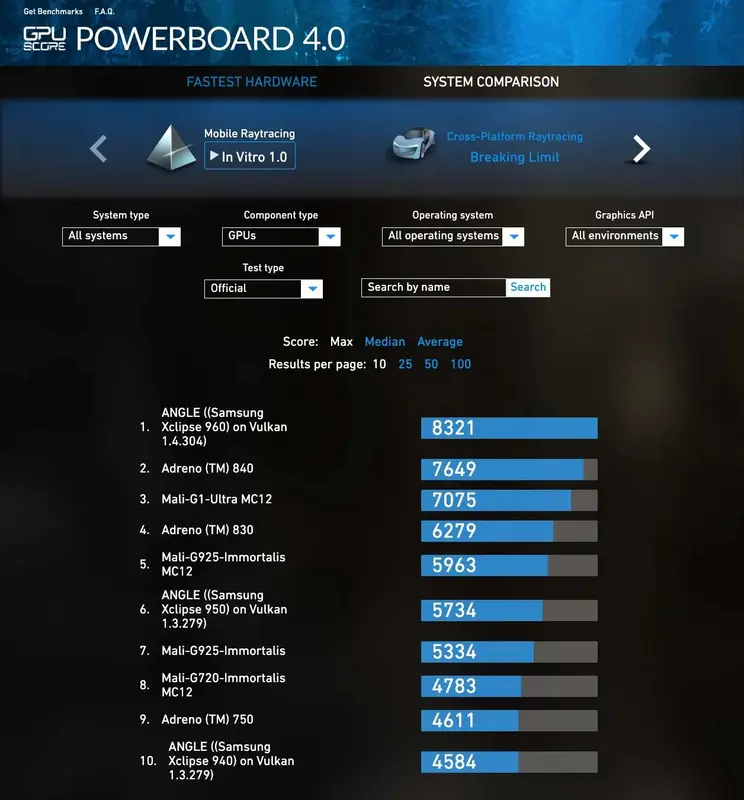
Samsung's upcoming Exynos 2600 SoC is making waves ahead of the Galaxy S26 launch. Early benchmark results show the chip's Xclipse 960 GPU delivering record-breaking Ray Tracing performance that surpasses its main rivals.
According to Basemark's In Vitro 1.0 Ray Tracing test, the Exynos 2600 scored an impressive 8,321 points. This puts it ahead of the Snapdragon 8 Elite Gen 5's Adreno 840 GPU by about 8%, and it outperforms the MediaTek Dimensity 9500's Mali-G1-Ultra by 17%.
AMD RDNA 4 Powers the Xclipse 960
The secret behind this graphics prowess is AMD's RDNA 4 architecture. Samsung partnered with AMD to integrate this technology into the Xclipse 960, the same ray tracing hardware found in AMD's current-generation desktop graphics cards.
This collaboration gives Samsung a significant edge in mobile graphics rendering. Ray Tracing creates more realistic lighting, shadows, and reflections in games and applications that support the feature.
CPU Performance Still Trails Snapdragon
While the Exynos 2600 leads in graphics, it doesn't dominate every category. Recent reports indicate the chip falls behind Qualcomm's latest processor in single-core CPU benchmarks. The Galaxy S26 Ultra with Snapdragon 8 Elite shows stronger single-threaded performance in Geekbench tests.
This creates an interesting split for buyers. If gaming and visual content matter most, the Exynos-powered Galaxy S26 base model delivers. Users prioritizing raw processing speed might prefer the Snapdragon variant expected in certain regions and the Ultra model.
Regional Variations Remain Unclear
Samsung hasn't confirmed which markets will receive Exynos versus Snapdragon versions of the Galaxy S26 series. Historically, Samsung split its flagship releases by region, though recent generations saw more consistency. The company may adjust its strategy based on these benchmark results.
Industry analysts expect more detailed comparisons between the two chip variants as the Galaxy S26 launch approaches. Final retail performance often differs from early engineering samples, so these numbers could shift.